
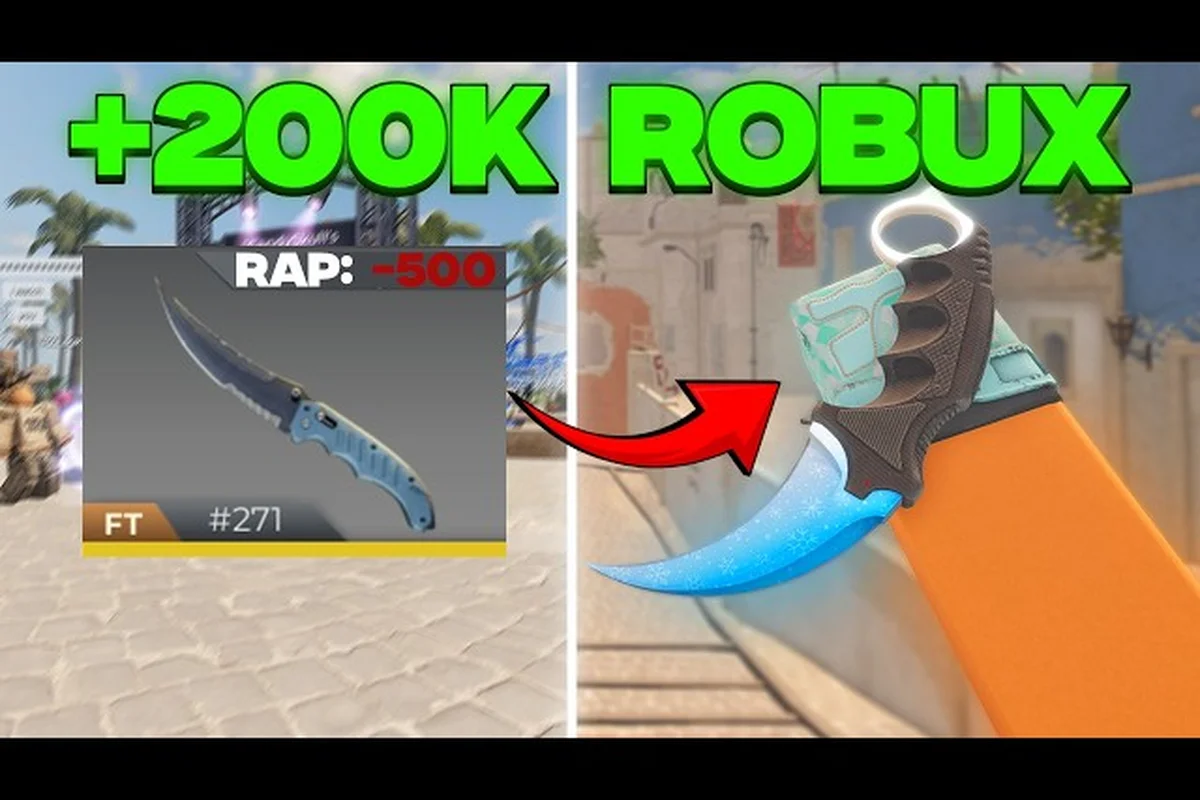
The BloxStrike skin trade runs on a player-driven marketplace where tier, finish quality, and pattern roll set the real value of every item. Knowing how those layers combine is what separates a profitable trade from a lowball on a high-tier drop.
How the BloxStrike Skin Trade Actually Works
Trading skins in BloxStrike runs through a player-driven marketplace that mirrors the in-game weapon case economy. Every skin carries a hidden tier, a finish quality, and a pattern roll, and those three layers combine to set a real market rate. Understanding how those layers interact is the difference between closing a profitable trade and getting lowballed on a high-tier drop. The trading window itself lives inside the inventory menu and accepts item-for-item offers only, which is why knowing current skin prices before you open the menu is so important.
The economy is intentionally tied to case openings, which is where the supply of new skins enters the system. According to the official BloxStrike game page on Roblox, cases open without keys, and each case rotates on a timed schedule that the developer announces through the official @BloxStrikeRBLX Twitter account. That rotation matters for trade value because case-exclusive skins are time-locked drops, and once a case leaves rotation the supply dries up fast.
Community traders on the r/bloxstrike subreddit have built informal pricing models that factor in tier, finish, pattern index, and float value. The most common mistake newer players make is treating a Blue tier and a Gold tier skin as roughly equal, when in practice a Gold pattern skin can trade for ten to twenty times what a Blue sells for. A solid BloxStrike skin trade starts with a clear read on those tier multipliers and the current case rotation.
Players who want a deeper breakdown of the rarity system should check out the BloxStrike skin guide, which maps every tier to the visual cues the game uses. The rest of this article focuses on the trade side: how to read values, which skins are pulling top dollar, and how to avoid the most common trade traps.
Understanding Skin Tiers and Their Trade Value
Every skin in BloxStrike belongs to one of five rarity tiers, and each tier carries its own baseline trade multiplier. Players on r/bloxstrike have confirmed the five-tier system (Blue, Purple, Pink, Red, Gold) in multiple threads, and the gap between the bottom tier and the top tier is enormous. The table below summarizes the community-tracked baseline values, though exact prices fluctuate based on active case rotations and event drops.
| Tier | Visual Cue | Trade Multiplier (vs Blue) | Demand Level |
|---|---|---|---|
| Blue | Plain colored wrap | 1x | Low |
| Purple | Subtle texture or accent | 3x | Moderate |
| Pink | Bold pattern or gradient | 8x | High |
| Red | Animated finish, rare accents | 20x | Very High |
| Gold | Full metallic, top-tier pattern | 50x+ | Extreme |
The multiplier column is built from community-reported trade offers, not an official ledger. Actual values shift with supply, because once a case rotates out the existing pool of skins at that tier becomes a closed market, and prices climb quickly. Traders who hold onto Red and Gold skins during an active rotation window tend to make the cleanest profits because buyers are still able to obtain fresh supply and demand stays competitive.
Two skins at the same tier are not necessarily worth the same in a trade. Finish quality and pattern index add their own premiums on top of the baseline multiplier, and that is where the trade-savvy players separate themselves from the casual sellers. A Gold skin with a clean pattern index can pull double the offers of another Gold skin with a busy or off-center pattern, even though they share the same tier badge.
Finish Quality and Float
Float is the wear rating the game assigns when a skin is first unboxed, and it stays locked to that skin for life. A lower float number means a cleaner, brighter finish, while a higher float reads as scratched, faded, or worn. Float only applies to certain finish types, but when it does, the trade value swing is significant. Players who check the float number before accepting a trade are the ones who consistently close deals at fair market rates.
| Float Range | Finish Label | Trade Premium |
|---|---|---|
| 0.00 – 0.07 | Factory New | +80% |
| 0.07 – 0.15 | Minimal Wear | +40% |
| 0.15 – 0.38 | Field-Tested | Baseline |
| 0.38 – 0.45 | Well-Worn | -25% |
| 0.45 – 1.00 | Battle-Scarred | -50% |
Float values are visible in the skin's inspection screen, and players who learn to read them before entering the trade window avoid the most common overpay mistakes. Community testing on r/bloxstrike suggests the game does not let you preview float before a trade is accepted, so the only reliable check happens through the inspection panel before you initiate the offer.
Pattern Index
Pattern index is the second hidden layer, and it matters most on Gold and Red tier skins. Every skin has a small pattern number between 1 and 999, and certain pattern values are widely considered "clean" because the artwork is centered, the colors are vivid, and no visual elements get cut off. The community calls these "clean pattern" skins, and they command a strong premium in any BloxStrike skin trade.
A pattern index in the 100-300 range is usually cleanest on most skins, while anything above 700 tends to have visual drift that some buyers do not want. There is no official pattern tier system, so the premium is purely a community-driven market effect, but it is consistent enough that experienced traders always check pattern before accepting a Red or Gold deal.
BloxStrike Skin Prices by Category
Prices on the secondary market cluster around the active case rotation, and the most expensive skins in any given week are almost always tied to whatever case the developer is pushing that week. Community traders track three main categories: rifle skins, pistol skins, and knife skins. Knife skins sit at the top of every price chart because they are the rarest drop pool and carry no weapon performance tradeoff in the trade window.
| Category | Average Price Range (Credits) | Top Skin | Peak Trade Value |
|---|---|---|---|
| Rifle Skins | 1,200 – 35,000 | AK-47 Gold Tempest | 80,000+ |
| Pistol Skins | 800 – 18,000 | Deagle Crimson Hex | 42,000 |
| Knife Skins | 5,000 – 90,000 | Karambit Aurora | 220,000+ |
| Gloves | 2,500 – 28,000 | Sport Gloves Vice | 65,000 |
The peak trade values listed above are pulled from community-reported high-end offers and may vary based on platform, event drops, and active case rotation. Knife skins dominate every BloxStrike skin prices conversation because the drop rate is so low that even a worn Blue-tier knife can outvalue a clean Red-tier rifle skin in the right trade window.
A related skin in any category tends to be worth 60-80% of the top skin's value, which gives traders a useful anchor when negotiating. If a buyer offers you a related skin at half the value of the top skin in that category, the offer is below market. If they offer 80% or more on a clean pattern, that is a fair starting point. The middle of that range is where most successful trades close.
The Most Expensive Skin and Rare Drops Worth Tracking
The BloxStrike most expensive skin right now is the Karambit Aurora in Factory New finish with a clean pattern index, based on community trade data from r/bloxstrike threads. This skin has consistently pulled offers above 200,000 Credits from verified traders, and the supply is so thin that the trade window is rarely active. When one does appear, the offers close within hours, which is why experienced players keep alerts on the trade channel and check multiple times a day.
After the Karambit Aurora, the next tier of BloxStrike rare skins is dominated by Gold tier rifle and pistol finishes. The AK-47 Gold Tempest, the M4A1-S Golden Coil, and the AWP Solar Flare all sit in the top ten most-traded skins on a weekly basis. These three are also the skins most likely to spike during major events, because the developer occasionally bundles a free pattern roll with case openings during limited-time drops.
Players interested in the full rare drop table should also look at the BloxStrike rarest skin breakdown, which tracks drop rates and event availability. A useful rule of thumb: if a skin is listed as event-exclusive, expect the price to climb 30-50% in the two weeks after the event ends, then stabilize at the new higher floor. That window is the best time to sell, and the worst time to buy.
| Skin Name | Tier | Drop Source | Average Trade Value |
|---|---|---|---|
| Karambit Aurora | Gold | Event-exclusive | 220,000+ |
| AK-47 Gold Tempest | Gold | Active case | 80,000+ |
| M4A1-S Golden Coil | Gold | Active case | 72,000+ |
| AWP Solar Flare | Red | Active case | 48,000 |
| Deagle Crimson Hex | Red | Active case | 42,000 |
| Sport Gloves Vice | Red | Limited drop | 65,000 |
| Tec-9 Medal Skin | Pink | Achievement | 18,000 |
The Tec-9 Medal Skin is a special case because it is awarded through an in-game achievement rather than a case drop, which means its supply grows very slowly. That makes it a stable trade asset even when the broader market is moving, and it is a popular skin for newer players to hold because the price does not crash during case rotations. More detail on how the Medal Skin fits into a wider loadout is covered in the BloxStrike shotgun guide, which maps weapon-side rarity to skin value.
How to Read and Build a Trade Offer
A clean trade offer rests on three pillars: a verified value read, a fair delta, and an understanding of what your side brings to the table. The first pillar means you have checked current community price trackers and at least one recent trade log, not just your own memory of what the skin was worth last month. The second pillar means the offer sits within a 10-15% delta of fair market, not a 50% gap that the other side will reject outright. The third pillar means you understand whether you are offering cash flow (popular skins that re-sell easily) or long-tail value (rare skins that take longer to move).
A common trade mistake is overvaluing personal attachment to a skin. Just because you unboxed it does not mean it has appreciated, and just because the skin looks flashy does not mean it carries a high tier. Always verify the actual tier badge and float before entering a number into the trade window.
Traders who want to keep their offers competitive should also study BloxStrike weapon values and how weapon-side rarity interacts with skin-tier value. Some weapons carry a base price premium because the weapon itself is rare or has been buffed in a recent patch, and adding a high-tier skin on top of that pushes the combined trade value much higher than the skin alone would suggest.
Step-by-Step Trade Walkthrough
Below is the standard flow experienced traders use to evaluate and close a BloxStrike skin trade. Each step is built around avoiding the most common slip-ups reported on r/bloxstrike.
| Step | Action | Why It Matters |
|---|---|---|
| 1 | Inspect the skin at the trade partner | Confirms tier, float, and pattern |
| 2 | Check recent trade logs on r/bloxstrike | Anchors you to current market rate |
| 3 | Calculate fair value for both sides | Prevents emotional overpay |
| 4 | Open trade and verify both items | Confirms no swap during confirm |
| 5 | Confirm and log the trade | Useful for future value reference |
Step 4 is the most common slip point. Some traders report items being swapped in the trade window during a confirm, especially when the partner uses a high-tier item as bait. Always take a screenshot of the trade contents before you hit confirm, and never rush the final step. The trade window has a five-second hold before lock, which is plenty of time to double-check both items.
Cash-Add Mechanics
Most BloxStrike skin trades are item-for-item, but the market accepts a small cash add in Credits when one side of the trade is meaningfully rarer. A typical Gold-for-Gold trade might include a 5,000-15,000 Credit add to balance the float or pattern gap, while a Red-for-Pink trade often runs the other way with a 20,000+ Credit add from the Pink side. Never agree to a cash add larger than the value gap itself, because that is the signature of a lowball offer.
Common Trade Mistakes and How to Avoid Them
The most expensive mistake a trader can make is selling during a case rotation dip, when the developer has just pushed a new case and the entire market briefly softens as players open fresh supply. If you can hold a high-tier skin for two to three weeks past a new case drop, the price usually recovers and then climbs because the new case draws attention to the entire skin economy.
Another common mistake is ignoring float when the skin's tier is high. A Gold skin in Battle-Scarred condition can lose half its value compared to the same skin in Factory New, and a trader who offers Gold-tier prices for a Battle-Scarred finish is leaving credits on the table. Always check float before you agree to a number.
A third mistake is chasing event skins at peak hype. The first 48 hours of an event drop window is when prices are highest, because the demand is loudest and the supply is thinnest. Waiting until the third or fourth day of an event usually lets you pick up the same skin at a 20-30% discount, and the price floor stabilizes within a week. Patience is the cleanest edge in any BloxStrike skin trade.
| Mistake | Consequence | Fix |
|---|---|---|
| Selling during case rotation dip | Lose 15-25% of value | Hold 2-3 weeks past drop |
| Ignoring float | Overpay on Battle-Scarred | Always check float in inspect |
| Buying at event peak | Pay 20-30% premium | Wait until day 3-4 of event |
| Skipping trade log check | Trade on outdated price | Check r/bloxstrike weekly |
| Rushing the trade confirm | Get item swapped | Screenshot before confirm |
The trade log check is underrated. Community-reported trade logs on r/bloxstrike give you a real-time read on what skins are actually closing for, which is far more reliable than guessing based on a price tracker that updates only monthly. Pair that with a float check and a clean pattern read, and you have the three filters that separate consistent winners from one-off lucky trades.
Closing the Deal: Long-Term Trade Strategy
Long-term success in the BloxStrike skin trade market comes from building a small portfolio of stable-value skins rather than chasing every new case. Holding two or three Gold tier skins across different weapon types gives you trade flexibility because you always have something the other side wants, and you can rotate holdings as the meta shifts. The Karambit Aurora, the AK-47 Gold Tempest, and the M4A1-S Golden Coil are the three most stable long-tail holds based on community data.
Timing matters as much as holding the right skin. The best window to sell is usually the week after an event ends, when supply has dried up but the new case has not yet drawn attention away from the old rotation. The best window to buy is the third or fourth day of a new case drop, when hype has cooled but the rotation is still active enough that demand will recover.
Players who want to round out their trade toolkit should also review BloxStrike skin condition details for a deeper read on float, StatTrak, and pattern premiums. Combining that with the price tables above gives you a complete picture of how to evaluate, time, and close a BloxStrike skin trade at fair market value. The market rewards patience and pattern recognition far more than it rewards speed, and the traders who treat skin trading like a long game consistently outperform the ones who flip skins week to week.
Frequently Asked Questions
What is the most expensive skin in BloxStrike right now?
The Karambit Aurora in Factory New finish with a clean pattern index currently tops community trade data, with verified offers above 220,000 Credits. Supply is extremely thin because the skin is event-exclusive, which is why prices stay elevated even during broader market dips. When a clean example appears in the trade window, it usually closes within hours.
How do BloxStrike skin prices shift during case rotations?
Prices soften by 10-20% in the first 48 hours of a new case drop as players open fresh supply, then recover over the following two to three weeks. Event-exclusive skins tend to spike 30-50% in the two weeks after an event ends because the supply pool closes. The cleanest read on current rotation pressure comes from r/bloxstrike trade threads, which update in near real time.
Are rare skins worth holding for long-term trade value?
Yes, especially Gold and high-tier Red skins on popular weapons like the AK-47 and M4A1-S. These skins hold value across case rotations and tend to appreciate when the active case rotates away from their weapon class. A balanced portfolio of two to three Gold tier skins across different weapons gives you the most trade flexibility over a six-month window.
Can I trade skins with cash adds in BloxStrike?
Yes, the trading system supports a small Credit add when one side of the trade is meaningfully rarer or higher-tier. A typical balanced trade uses a 5,000-15,000 Credit add to bridge a float or pattern gap, and a much larger add when trading across tier lines like Gold-for-Pink. Never accept a cash add larger than the actual value gap, because that signals a lowball offer.
How do I check a skin's float before trading?
Open the inspection panel from your inventory and look for the float value displayed under the skin's tier badge. Lower float numbers mean a cleaner Factory New finish, while higher floats read as Well-Worn or Battle-Scarred. The trade window itself does not show float, so the inspection panel is your only reliable check before you confirm a BloxStrike skin trade.