
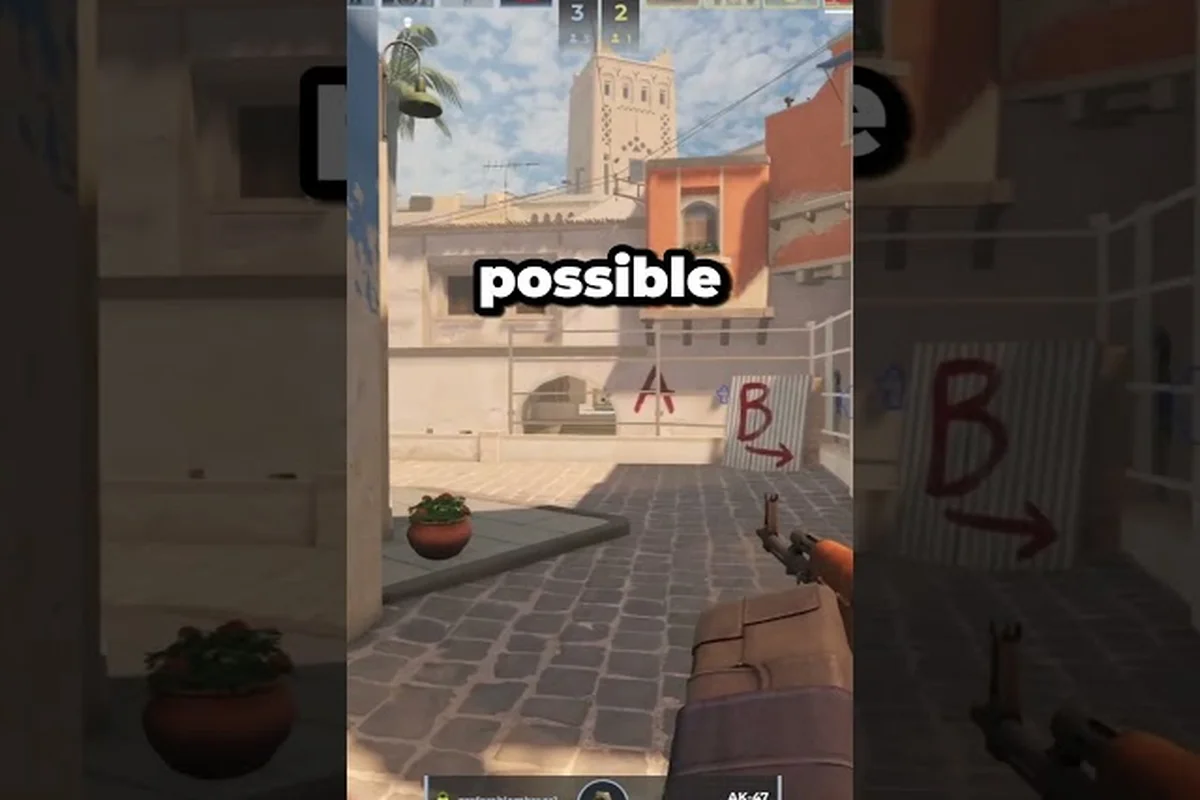
Credits are the soft currency that powers every weapon, case, and trade in BloxStrike, and learning the fastest way to stack them changes how the whole match loop feels. This BloxStrike credits guide breaks down the credit economy from the first round cash payout to late-game trade flips, so you can build a real wallet without ever spending Robux. If you want a head start on weapons before farming, the BloxStrike buy menu and credit cap guide shows exactly what each buy tier costs.
The Two-Currency System That Runs the Game
BloxStrike runs two overlapping currencies: round cash, which is what you earn inside an active match and spend on rifles, pistols, armor, and utility in the buy menu, and Credits, the persistent wallet balance that carries across sessions, feeds the case opener, and powers the trade system. Round cash resets to zero at the start of every half, while Credits stick to your account and grow as you perform, log in, and redeem codes.
According to the official BloxStrike game page on Roblox, the title launched on May 2, 2025 and by October 2026 it had passed 293 million visits with a 94.6% positive rating across more than 623,000 upvotes, which is a useful signal that the economy has stayed balanced long enough for the meta to settle. The developers reward round-by-round performance and consistency far more than a single flashy ace, so the fastest path to a stacked wallet is repeating the same productive loop dozens of times per session.
Round Cash vs. Persistent Credits
The distinction matters because most new players conflate the two and wonder why their wallet looks thin after a great match. Round cash is a per-half allowance, and any unspent amount disappears when the half flips. Persistent Credits are the number that shows up in your profile, the value that cases deduct, and the figure other players see when you propose a trade.
| Currency | Where it lives | Reset behavior | Primary use |
|---|---|---|---|
| Round cash | Buy menu during a live match | Zeroed at half swap | Rifles, pistols, armor, utility, grenades |
| Credits | Persistent account balance | Never resets | Cases, trade buys, Gamepass tier upgrades |
| Robux | Roblox platform wallet | Top-up only | Gamepass boosts, cosmetic shortcuts |
Once you internalize that round cash funds your in-match gear and Credits fund everything outside the match, the whole BloxStrike credit farm starts to click. Every kill, plant, defuse, and round win pumps both numbers, and the right habits multiply the result without adding minutes to your playtime.
Why Round Cash Matters Even When You Want Credits
It sounds counterintuitive to grind round cash when the long-term goal is a fat Credit balance, but the two economies feed each other. Buying full armor and the right rifle in round 2 wins more rounds, which earns more round cash, which lets you keep buying full loads the rest of the half, which pushes your match-end bonus higher. According to the r/bloxstrike community, players who skip armor early in order to bank Credits typically end the half with fewer rounds won and almost the same Credit gain, because the post-match payout is anchored to round outcomes more than kill counts.
The practical takeaway: spend round cash aggressively on wins, then let the persistent Credit drip and code drops compound the result. The match economy is the engine. The case and trade economy is the payoff.
The Fastest Match-Based Routes to BloxStrike Credits
The core loop for anyone who wants fast credits in BloxStrike is to convert good round decisions into a thicker persistent wallet. There are three levers you can pull inside a live match, and the strongest farmers mix all three every half instead of relying on just one.
| Source | Typical payout range | Trigger condition | Best audience |
|---|---|---|---|
| Round win bonus | Highest single-round payout | Win the round as a team | Full-stack players in a coordinated stack |
| Kill reward | Small, but adds up across 25-30 rounds | Each elimination, plus assist credit on trade damage | Aggressive riflers and AWPers |
| Objective bonus | Mid-range flat payout | Successful plant, defuse, or clutch round | Support and IGL-minded players |
| Loss bonus | Small but compounding | Loss halves (amounts vary by round count lost) | Eco round survivors holding utility for next half |
According to community testing on r/bloxstrike, the loss-bonus mechanic is the most underused source of farm progress because newer players think losing rounds is a dead end. In practice, three or four eco losses in a row stack a loss-bonus multiplier that makes the buy-back into a rifle round much smoother, and the persistent Credit payout from a close loss is often only 10-15% behind a clean win.
Planting, Defusing, and Objective Round Payouts
Plants and defuses trigger a flat objective bonus on top of the round win payout, which is why support players tend to climb the Credit leaderboard even with modest kill totals. If your team runs a default plant on the A site and your entry fragger trades out, the planter who sticks the bomb and the defuse player on the other half both earn a chunky flat reward. Community reports from r/bloxstrike suggest objective bonuses are roughly equivalent to a single kill reward on average, but they fire much more predictably, so players who specialize in utility usage tend to bank a higher hourly Credit rate than pure fraggers.
The Loss Bonus Multiplier
Loss bonuses are the cleanest example of a credit farm that pays you for staying in a losing game. After three or four straight losses, the loss-bonus payout per round climbs to the point where one round can fund a pistol plus light armor for the entire next round, and the persistent Credit drip is meaningful enough that even a 4-13 half leaves you with a positive wallet. Community testing suggests the loss-bonus tier resets after a round win, so the strategy is to either commit hard to a comeback or fully accept the eco cycle and stack the next half instead of forcing a doomed buy.
Passive and Code-Based Credit Sources
Active match play is the engine, but BloxStrike also hands out a steady stream of free credits through three passive channels that compound quietly in the background. The fastest climbers run a daily login habit, redeem every code the moment it drops, and stockpile case rewards instead of burning them on impulse rolls.
| Passive source | Frequency | Typical payout | Effort required |
|---|---|---|---|
| Daily login streak | Once per day | Modest Credit drip, scaling with streak length | Open the game and accept the reward |
| Redeem codes | Several per month | Variable, often bundled with case drops | Watch the official X account and enter the code |
| Case rewards | Whenever a credit-funded case is opened | Randomized skin or Credit refund | Buy and open a case |
| Free battle pass tier | Each season | Tier-based Credit and skin payouts | Earn XP through matches |
The official BloxStrike X account is the single best signal for code drops and login-event timing. Community tracking of recent months shows that codes like OCTOBER_DOWNTIME, MYFAULTYALL, and GLOVECASE2 hit the account with little warning, and they usually expire within a week. Setting a notification for that account is the easiest five-second action that pays out the highest credits-per-effort ratio in the entire economy.
Daily Login Streaks and Event Windows
Login streaks in BloxStrike are a classic compounding mechanic. The first day pays a small Credit drip, day two pays slightly more, and by the end of a seven-day cycle the daily reward is roughly three to four times the starting amount, often paired with a case voucher. If you miss a day, the streak resets to day one, so the habit matters more than the absolute time investment. The single highest-leverage thing a new player can do for their wallet is open BloxStrike for ten minutes every day to claim the streak, even on days when the ranked grind feels unrewarding.
Redeem Codes: The Free Credit Drops
Codes are the closest thing BloxStrike has to a free money glitch. They are short text strings the developers post on the official X account, sometimes bundled with a patch announcement or a new map reveal. Recent drops have included rewards for Credits alone, Credits plus a cosmetic, and Credits plus a case key. The redemption window is usually tight, so the rule is to enter the code the same hour you see it.
| Code aspect | Detail |
|---|---|
| Where codes are posted | Official X account @BloxStrikeRBLX |
| Typical expiry | 3-14 days, occasionally longer for event codes |
| Reward structure | Credits, case vouchers, or bundled skin + Credit drops |
| How to redeem | Settings menu, then the Code tab, enter the string exactly as posted |
| Common mistake | Missing capitalization or hitting redeem on an expired string |
If you want a full primer on turning free credits into trade inventory, the BloxStrike credits-to-cases loop guide walks through how to convert those drops into skin equity without burning them on bad cases.
Trading as a Credit Multiplier
The trade system is where the persistent Credit wallet stops being a slow drip and starts behaving like an actual economy. Once you have a baseline stack of Credits and a few low-tier skins, you can flip undervalued items into higher-tier skins by waiting for the right buyer. The BloxStrike trade cooldown system is the gatekeeper here, so the strategy is to time your trades around the cooldown window and to never force a sale below your target price.
Reading Trade Value Without Getting Fleeced
Every tradable skin in BloxStrike has a community-tracked value, usually expressed in Credits, and that value moves with supply and case rotation pressure. The five skin tiers (Blue, Purple, Pink, Red, and Gold) form the backbone of the market, and roughly 80% of beginner trades sit in the Blue-to-Purple range because those are the skins most players have in their inventories. When a new case drops, mid-tier skins often dip 10-20% as more supply enters the market, and a savvy trader buys the dip, waits two to three weeks for the price to recover, and flips the skin to a player chasing a specific loadout.
| Tier | Color | Trade liquidity | Typical Credit range | Beginner advice |
|---|---|---|---|---|
| Blue | Blue | Very high | Low | Safe starter trades, low upside |
| Purple | Purple | High | Low-mid | Best value-for-Credit flips for new traders |
| Pink | Pink | Moderate | Mid | Strong upgrade target after a few flips |
| Red | Red | Low-moderate | High | Hold for serious upgrades, watch for dips |
| Gold | Gold | Very low | Very high | Trophy items, trade only when overpaying |
Community reports from r/bloxstrike describe a healthy five-tier rarity system with the cases opening without keys, which means the supply pressure comes from how often a case is opened rather than from key scarcity. The implication for a credit farm is that grinding Credits and parking them in a Purple-tier skin for two to three weeks is often a higher return than burning Credits on three or four impulse case rolls in a row.
Avoiding Trade Scams and Cooldown Traps
The trade cooldown is the most common trap for new traders. BloxStrike blocks every successful trade for a fixed window, and the timer extends every time a trade goes through, so chain-trading in one sitting is a fast path to being locked out for 24+ hours. Smart traders plan two or three trades per week, not two or three per hour, and they verify the partner's offer screen-by-screen before locking the deal.
The other common scam is the value-mismatch trade, where a partner offers a Pink-tier skin with a worn pattern and asks for a clean Pink-tier of equal listed value. The listed value is the same, but the worn pattern is worth 20-30% less on the secondary market. Always compare skin, pattern, and wear tier before accepting, and never trade under time pressure from the other side of the offer.
Building a Daily Credit Routine That Compounds
A BloxStrike credit farm is less about one heroic farming session and more about a daily routine that compounds quietly across the week. The strongest wallets in the community are built by players who run the same five-step loop every day, and who treat each step as a small deposit rather than a big play.
A Practical Daily Loop
| Step | Action | Time cost | Expected return |
|---|---|---|---|
| 1 | Claim daily login reward | 30 seconds | Streak-scaled Credit drip |
| 2 | Check official X account for new code | 1-2 minutes | Variable Credit and case drop |
| 3 | Enter any active code in the settings menu | 30 seconds | Redeems the code reward |
| 4 | Play 2-3 competitive matches with full buys | 20-30 minutes | Round cash, win bonus, persistent Credit payout |
| 5 | Open one case if a budget allows it | 1 minute | Randomized skin or Credit refund |
Running that loop once per day for a week typically nets more Credits than a single six-hour grind session, because the streak bonuses, code drops, and case cooldown windows all reset on a daily cadence. The two- to three-match play block is also the sweet spot for ranked progression, which feeds the persistent Credit payout even further.
When to Spend and When to Bank
The hardest decision in any credit economy is the spend-vs-bank tradeoff. BloxStrike makes it slightly easier because the buy menu resets every half, so round cash is forced to be spent, while persistent Credits can sit indefinitely. A common rule of thumb from the r/bloxstrike community is to keep at least a baseline Credit reserve for trade opportunities, spend the rest on cases during rotation weeks, and top up the reserve immediately after any large trade.
If you want to deepen the weapon-buying side of the loop, the BloxStrike new player settings and loadout primer covers the crosshair, sensitivity, and buy habits that make the two-to-three match block more efficient. Pairing a tighter settings profile with the daily loop is the difference between farming Credits and farming Credits well.
Frequently Asked Questions
What is the fastest way to earn BloxStrike Credits as a free player?
The fastest free route is a daily loop: claim the login streak, redeem any active code from the official BloxStrike X account, then play two to three competitive matches with full buys to maximize round cash and the post-match Credit payout. This stack typically out-earns a single long grind session because of the streak and code compounding.
Do BloxStrike redeem codes give free Credits every time?
Most code drops include a Credit bundle, often paired with a case voucher or a small skin. Rewards vary by code, and codes expire quickly, usually within 3-14 days, so the habit is to enter the code the same hour the X account posts it.
How does round cash connect to the persistent Credit balance?
Round cash resets every half and only spends inside the buy menu, but every kill, plant, defuse, and round win also generates a smaller persistent Credit payout that carries between sessions. Spending round cash aggressively to win more rounds tends to net more persistent Credits over a session than hoarding the round cash and losing the half.
Is the BloxStrike credit farm viable without spending Robux?
Yes. The full credit loop (login streak, codes, match performance, case rewards, low-tier trade flips) is designed to be Robux-free, and most of the strongest free-to-play wallets on r/bloxstrike are built entirely on those channels. Robux only becomes useful as a shortcut for Gamepass cooldown reductions or cosmetic conveniences, not as a requirement for a competitive Credit wallet.